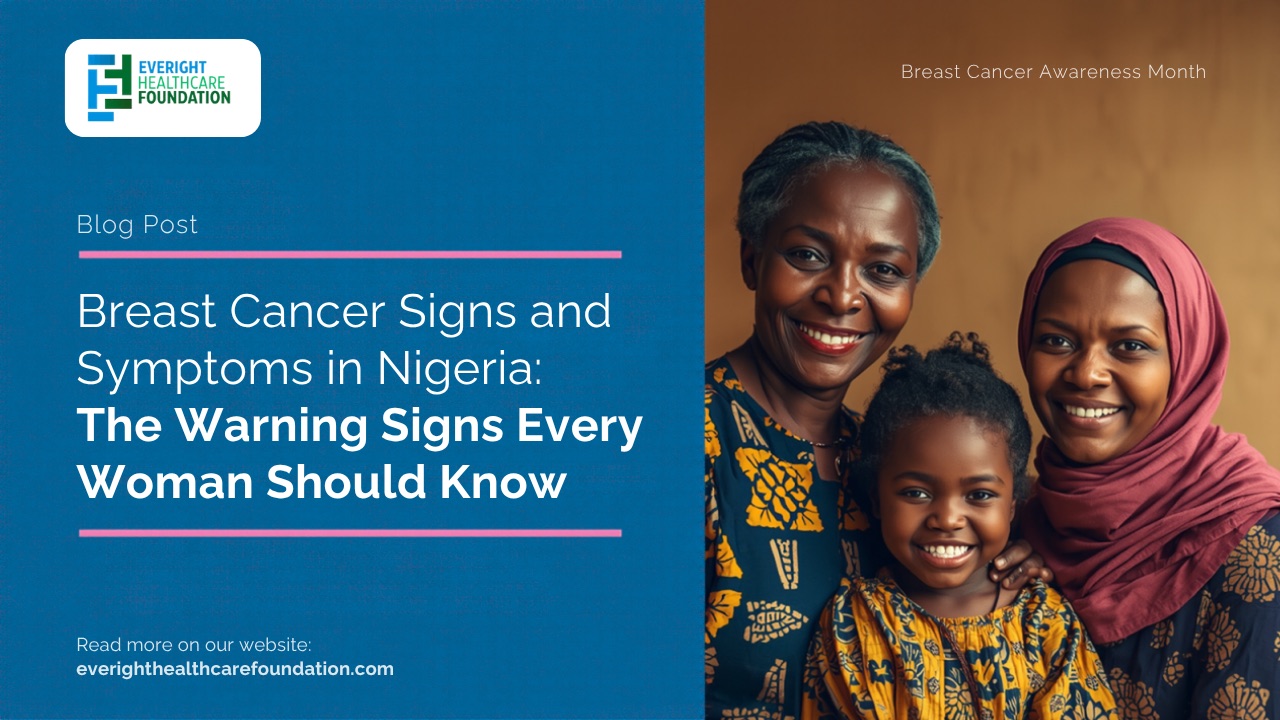
Breast cancer signs and symptoms in Nigeria go beyond a lump. Learn the warning signs, the facts, and the steps every woman should take.
October is Breast Cancer Awareness Month, and the World Health Organization’s theme for 2026 is “Every story is unique, every journey matters.” Behind every number is a woman and a family. Here are the breast cancer signs and symptoms every Nigerian woman needs to know.
When Something Feels Different: A Moment Many Women Know
Imagine sitting at home after a long day, preparing dinner or resting with family, when you notice something slightly different about your body. Maybe it's a mild tugging sensation, an unfamiliar patch of rough skin, or a subtle change you can't quite place.
You stop. You wonder: Is this normal? Should I mention it to someone, or should I just pray and wait for it to go away?
That quiet, uneasy tension is where many women across Nigeria live. We often put our children, our spouses, our work, and our communities before our own bodies. And too many women miss the early warning signs, not because they weren't paying attention, but because no one told them what to look for.
Breast cancer signs and symptoms in Nigeria go beyond a lump, and that gap in awareness is costing lives. Understanding them isn't about fear; it's about giving yourself and the people who love you the gift of time.
What Is Breast Cancer?
Breast cancer begins when normal cells inside the breast tissue start to grow abnormally and out of control. Instead of renewing themselves the way healthy cells do, these extra cells form a mass or tissue change that should not be there.
If it is not caught early, those changing cells can spread to other parts of the body, making treatment far more difficult.
It does not happen because of a family curse, bad luck, or something you did wrong. It is a physical change in the body's cells. And because it often develops without pain or obvious symptoms in its early stages, knowing what to watch for is the most powerful tool you have.
Breast Cancer Signs and Symptoms in Nigeria: It’s Not Just a Lump
When most people hear about breast cancer, they think of a lump. A new lump is the most common sign, and it always needs checking. But it is not the only one, and many women miss the other changes their body is showing them.
Here is what every woman, and the family members who care for her, should know:
- A new lump or thickening: A lump or firm area in the breast or armpit that feels different from the tissue around it, even if it does not hurt.
- Skin changes: Dimpling, puckering, redness, or skin that begins to look and feel like the outside of an orange peel.
- Nipple changes: A nipple that suddenly turns inward, changes shape, or feels unusually tender.
- Unusual discharge: Any liquid or blood coming from the nipple when you are not breastfeeding.
- Swelling or shape change: Sudden warmth, swelling, or an unexplained change in the size or contour of one breast.
- Persistent pain: Pain in the breast or armpit that does not go away with your regular cycle. Many Nigerian women delay seeking care because they believe pain must be severe before it is worth reporting. Any persistent discomfort is worth checking out.
If you or an elder in your family notices any of these breast cancer warning signs, please do not wait.
Why Early Detection Saves Lives in Nigeria
The numbers tell a difficult story, but also an urgent one:
- Nigeria recorded 53,500 new breast cancer cases in 2023, a 542.9% increase since 1990. In the same year, breast cancer claimed 26,200 lives in Nigeria. (Source: Global Burden of Disease Study, The Lancet Oncology, 2026)
- Only about 28% of Nigerian women diagnosed with breast cancer between 2017 and 2021 were alive five years later, compared to a global median of 78%. (Source: WHO Global Health Observatory data, reported by NPR, 2026)
- About three in four women (77%) diagnosed with breast cancer in Nigerian hospitals between 2018 and 2023 were already at stage three or four, when treatment is much harder and outcomes are far worse. (Source: ecancermedicalscience, 2025)
These numbers are not meant to frighten you. They show what is at stake, and why early detection of breast cancer in Nigeria matters so much. When breast cancer is found early, it is far easier to treat. That is the difference awareness makes.
What Everight Healthcare Foundation Is Doing About Breast Cancer in Nigeria
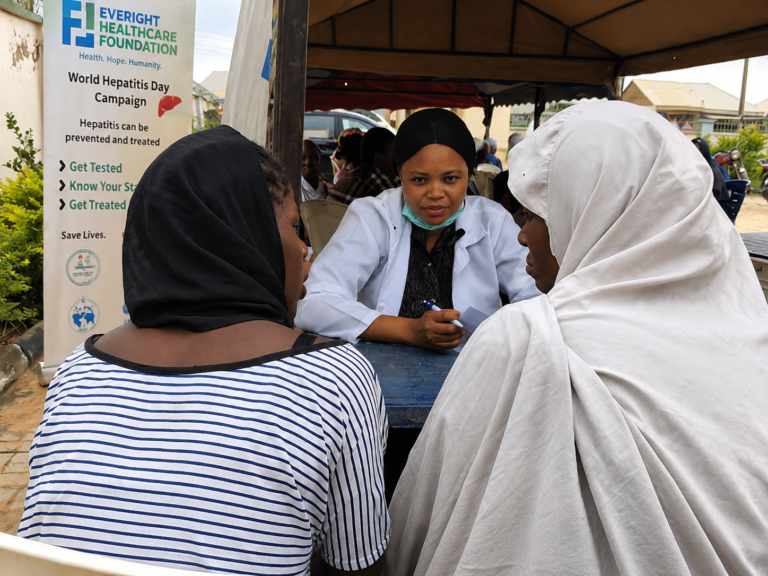
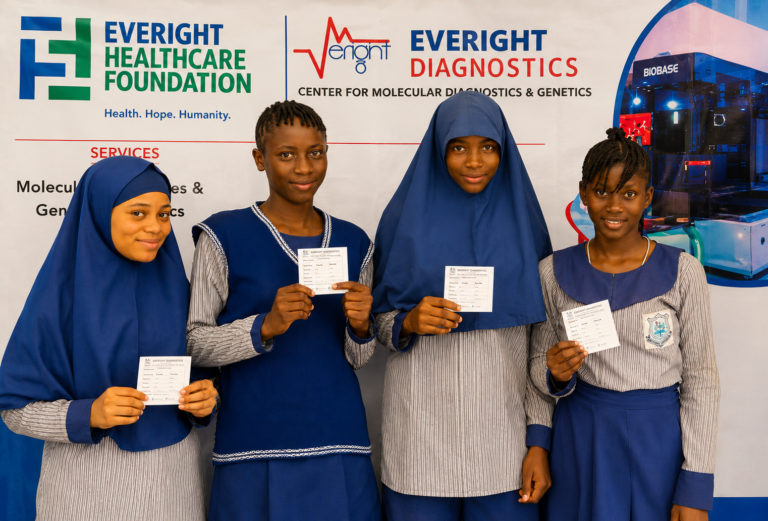
At Everight Healthcare Foundation, we believe that access to early detection should never be a privilege. Every woman, regardless of where she lives or what she earns, deserves the chance to catch this early.
Through these outreaches, we bring free and subsidised health screening, health education, and referrals directly to women where they live and work — cutting through the barriers of distance, cost, and stigma that keep too many women from getting checked.
What You Can Do Today to Catch Breast Cancer Early
Taking control of your health starts with small, consistent steps:
- Do a self-examination once a month. Check your breasts visually and manually. You are looking for anything that feels or looks different from your normal.
- Know your normal. The sooner you understand what is usual for your body, the faster you will notice a change worth reporting.
- Get screened clinically. A self-examination is a starting point, not a substitute for a professional breast examination. Visit a health facility or attend an EHF outreach near you.
- Talk to the women around you. Encouraging your mother, aunt, neighbor, or older sister to get a clinical breast examination could save her life. Awareness spreads person to person, and so does the courage to act on it.
- Stay connected to reliable health information. Follow Everight Healthcare Foundation for updates on outreach schedules, 2026 Breast Cancer Awareness campaigns, and upcoming programs.
To reach us directly: send us an email at contact@everighthealthcarefoundation.com or visit us at 3 Fez Street, Wuse II, Abuja
Breast cancer signs and symptoms in Nigeria are not always obvious, and a lump is not the only signal. Your body speaks in many ways. Learning its language and acting on what it tells you could save your life or someone you love. Don't wait for pain. Don't wait for certainty. Get checked.